Monday, 29 December 2025

Tokify: A Free AI Tool That Reads Any Text for You


 In a world where information moves faster than ever, tools that help us consume content more efficiently are becoming essential. Tokify, available through the Lovable App platform, is one of the simplest and most accessible text‑to‑speech tools online. It allows anyone to paste text of any length and instantly listen to it in natural‑sounding AI voices.

Whether you're a student, a writer, a multitasker, or someone who simply prefers listening over reading, Tokify offers a clean, no‑frills solution that turns written content into audio within seconds.

Tokify is a free, browser‑based text‑to‑speech tool hosted on the Lovable App platform. Its purpose is straightforward: Paste any text, choose a narrator, and listen.

According to the page, the interface is intentionally minimal:

  • A text box where you paste or type your content

  • A word and character counter

  • A selection of natural‑sounding AI voices

  • Simple playback controls (Play, Stop, Previous, Next)

There are no downloads, no sign‑ups, and no usage limits mentioned on the page — making it one of the easiest TTS tools to start using immediately.

Using Tokify takes less than a minute. Here’s the step‑by‑step process:

1. Visit the Website

Go to: https://voice-joyful.lovable.app/

The page loads instantly with the text box front and center.

2. Paste or Type Your Text

You can insert:

  • Articles

  • Essays

  • Emails

  • Stories

  • Study notes

  • Social media drafts

  • Or any text you want to hear aloud

The tool supports any length of text, and the counter updates automatically.

Choose a Narrator

Tokify offers multiple AI voices, including:

  • 🇬🇧 British Male

  • 🇬🇧 British Female

  • 🇺🇸 American Male

  • 🇺🇸 American Female

These voices are designed to sound natural and pleasant, making long listening sessions comfortable.

Press Play

Once you hit Play, the tool begins reading your text aloud. You can also:

  • Stop playback

  • Navigate between sentences using Previous and Next buttons

This makes it especially useful for proofreading or studying.

🌟 Who Is Tokify For?

Tokify is versatile enough to benefit a wide range of users:

Students

  • Listen to study notes

  • Convert textbook excerpts into audio

  • Review essays by hearing them aloud

Writers & Editors

  • Proofread drafts by listening for flow and clarity

  • Catch awkward phrasing or repeated words

  • Experience your writing the way a reader might hear it

Professionals

  • Turn long emails or reports into audio

  • Listen while commuting or multitasking

Language Learners

  • Hear pronunciation

  • Improve listening comprehension

  • Follow along with written text

People with Visual or Reading Difficulties

  • Access written content more easily

  • Reduce eye strain

  • Enjoy a more inclusive reading experience

Anyone Who Prefers Audio

Some people simply absorb information better through sound — Tokify makes that effortless.

🚀 Benefits of Using Tokify

Completely Free

No subscription, no paywall, no trial period.

No Account Needed

You can use it instantly — perfect for quick tasks.

Natural‑Sounding Voices

The voices are smooth and easy to listen to, avoiding the robotic tone of older TTS tools.

Unlimited Text

The page does not specify any text limit, and the interface is designed for long‑form content.

Great for Multitasking

Turn reading time into listening time while:

  • Cooking

  • Exercising

  • Driving

  • Working

Excellent for Proofreading

Hearing your own writing read aloud reveals mistakes your eyes miss.

Simple, Clean Interface

No clutter, no ads (aside from a placeholder), and no confusing menus.

Works on Any Device

Because it’s browser‑based, Tokify works on:

  • Laptops

  • Tablets

  • Phones

🎤 Final Thoughts

Tokify is one of those rare tools that does exactly what it promises — nothing more, nothing less. It’s fast, free, and incredibly easy to use. Whether you’re trying to improve your writing, study more effectively, or simply give your eyes a break, Tokify offers a smooth and accessible way to turn text into audio.

If you’re looking for a lightweight, no‑commitment text‑to‑speech solution, this tool is absolutely worth bookmarking.

The defender of the faithful: Nur Al-Din Mahmud Zengi


By Mahnoor Khan

Nur al-Din Mahmud Zengi was a member of the Oghuz Turkish Zengid dynasty, which ruled the Syrian province (Sham) of the Seljuk Empire. He is regarded as an important figure of the Second Crusade.

He was the Turkish ruler of Aleppo, and Mosul. After the assassination of his father, Nuruddin started the ongoing war against the crusaders. 

In 1148, he won the Second Crusade, led by Louis VII of France and Conrad III of Germany. He defeated the crusaders many times in Syria & Palestine and defended Egypt from them. By 1154, Damascus was under control and all of Syria was united under Nuruddin's rule.

Nuruddin built universities and Masjids in all the cities he ruled. These universities were very concerned with teaching the Qur'an and Hadith.

He held court hearings several times a week so that people could seek justice for him against his generals or superiors. He is a famous man of military courage, dedication, and modesty. 

#nurudinzangi #Salahuddin #salahuddinalayubi #SultanSalahuddinAyubi #ottoman #turkiye #turkish #turkishseries #IslamicHistory #KuruluşOsman

Monday, 25 September 2023

Brent-based charity, An-Nisa Society, calls for urgent investigation into institutional Islamophobia at Brent Council

*Brent-based charity, An-Nisa Society, calls for urgent investigation into institutional Islamophobia at Brent Council*

Two weeks ago, a young Muslim mother with her baby was attacked with Islamophobic abuse on the 260 bus in Harlesden. She was called a ‘jihadi,’ referring to her faith, and was sworn at in an unprovoked incident. No one, except another Muslim woman, challenged the man. Even more shocking was that the Mayor of Brent stood right next to the abuser and did not report the incident to the relevant authorities.
 
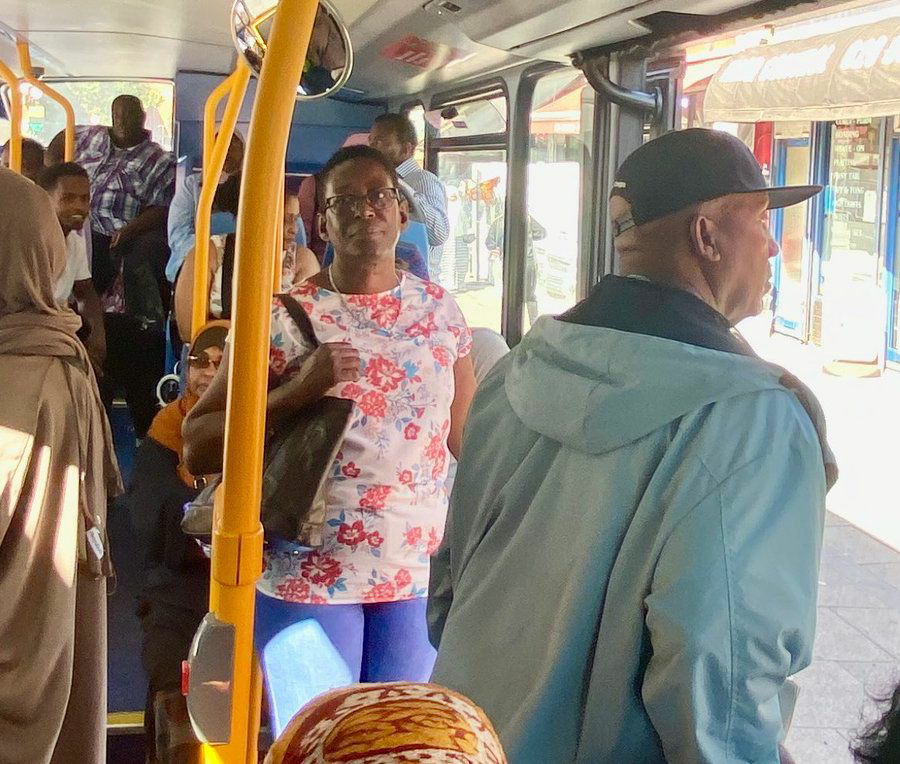
By chance, journalist Shamim Chowdhury was on the same bus, challenged the abuser and offered support to the woman that was being attacked. She was consequently threatened by him as well. What was particularly tragic, is that several passengers on the bus, rather than support the traumatised victim, raised their voices in support of the male abuser! This, despite, judging from the image, everyone on the bus and the abuser were people of colour!
 
Shamim managed to take a photograph of the abuser and posted it onto Twitter detailing what happened and also reported the incident to the police and Transport for London (TfL).

The tweet went viral, reaching and surpassing half a million views. Members of the public identified that the woman in the flowery top standing next to the abuser was actually the Mayor of Brent, Councillor Orleen Hylton. The issue is not that the Mayor did not challenge the abuser there and then, but that in her position and role as Mayor and Councillor, she did not later report the incident to the police and the relevant departments within Brent Council. It was her duty and moral obligation to speedily report the incident and take action, and we cannot understand why she chose to remain silent.
 
As a Brent-based charity that works for the welfare of Muslim women and families for the past 35 plus years, we were horrified with what had happened. We immediately asked Brent Council for a response. Working with Muslim women, we know that many live in constant fear of being attacked, as Islamophobic abuse is rife in Brent. We circumscribe our lives to avoid abuse, as we don’t feel safe. However, none of us can avoid going out or using public transport.
 
Sadly, we have had several reports of attacks on Muslim women in Brent and in particular on buses and bus stops on the Harrow Road route through Harlesden. It begs the question as to why this is happening on this route and it needs to be investigated.
 
Muslims suffer the highest levels of abuse and attacks across the UK, and these are greatly under-reported and not even recorded for a variety of reasons. Muslim women especially are on the frontlines of Islamophobic attacks.
 
In Brent we have had reports of many Muslim women being attacked. Road crossings seem to be a favoured place for attacks as well as on buses. Outside Islamia School in Salusbury Road, there have been several instances of attempts at running Muslim women over, usually with children in tow! One Muslim woman at another crossing, had a woman stop her car, get out and hit her on the head with, ironically, a bunch of flowers, while shouting anti-Muslim expletives.
 
So, you can imagine our distress and horror at this incident on the 260 bus. Hundreds of people on Twitter were also enraged at the attack, with many leaving comments and retweeting. The views of the photo that the journalist posted were rapidly increasing, reaching over 630k at the time of writing. On my personal LinkedIn page post of the incident, there are over 20,500 impressions today and rising, with numerous shares and comments agreeing that such attacks were rife and expressing shock at the Mayor’s lack of action. The Muslim community in Brent were also sharing the incident on WhatsApp and in person with each other, speaking about their shock and distress. Despite the upset the incident caused and the growing comments, Brent Council remained silent for five days.
 
We expected that there would have been a deluge of councillors expressing concern about the safety of women, there are 57 of them! But disappointingly, only a couple of Muslim male councillors responded and a new female Muslim councillor, Ishma Moeen, who expressed strong concern and gave a promise to work for change. Why is a Muslim woman being attacked locally, only a concern for Muslim councillors?
 
The response that eventually came from the council was shocking in its banality, basically a ‘fobbing off’ type of classic corporate statement. Clearly, they did not give the incident any importance. The response from the Mayor, whose ward consists of 27% Muslims, sounded uncaring and inconsistent. She said she was at the front of the bus, so denied that she saw or heard anything but also contradictorily added that she was intimidated, which is why she didn’t intervene! It seems highly unlikely according to journalist, Shamim Chowdury, that the Mayor did not see and hear what was going on as such a big ruckus was created on the bus.
 
The Mayor’s lack of action as a public servant is of grave concern. In our view, she displayed moral cowardice and lack of integrity. She has not even apologised at the very least for her actions. This year, funnily enough, the Mayor was appointed for her ‘service’ to the borough In her appointment statement she “assured the community that she will work tirelessly…to surpass expectations and deliver the best results for Brent’s diverse communities.” As a result of her actions, how can the community trust the Mayor to fairly represent their issues with understanding and vigour, if she ignores abuse that she’s been a witness to? She has lost all credibility. She has failed in her duty to Brent residents. The moral and right thing for her to do is to resign. Or failing that the council should sack her. 
 
However, neither has happened, she continues to be a guest of honour at events in the borough, shockingly so soon after the bus incident. There was the Mayor’s Fun Day, in Wembley on Saturday 16 September, organised by Brent Health Matters, which is a council initiative, and she was seen laughing and enjoying herself, as well as being given status and kudos.
 
On Sunday, she was guest of honour at Queens Park Day, where she was spotted by a Muslim Harlesden resident, whose daughter was performing there. The resident approached the Mayor, and politely told her that ‘her response to a woman being verbally abused was disappointing.’ She replied, that a statement had been issued. He asked if she could tell him the main points of the statement as he had not seen it, and whether she had written it herself or if was it delegated. At that point, security stepped in and whisked her away! The Harlesden resident was very disturbed by the incident and Brent Council’s lack of robust response. He told me, “The Mayor has a responsibility as a representative of the community to model the behaviour we ask of our kids.” He added, “I have a daughter, who will soon be travelling to school alone on local buses and if the Mayor can’t take action to keep the local area and buses safe, then we are very concerned.” 

 The Mayor at Queens Park Day
 
So, not only has the Mayor not resigned or been suspended, she continues to merrily carry out her duties at local community events in total disregard for the huge upset amongst the community. This behaviour is symptomatic of the lack of moral integrity in local and central government, and politics generally.  It also sends signals that Islamophobia and attacking vulnerable Muslim women is okay.
 
Meanwhile, the council’s statement did not answer any of the questions that we posed, other than it had been reported to the police (not by the Mayor obviously)!  We had asked the council for specifics to let us know who in the police is dealing with this incident; what are they doing about it; we asked for figures on Islamophobic attacks in Brent; what are the monitoring processes; how are these attacks recorded. There was radio silence and still is. We do not accept their condescending statement, and want tangible and measurable actions so that such attacks are stopped.
 
We also wanted to know what the council is doing to ensure the safety of Muslims, particularly Muslim women. Apparently, there is  a Brent Council Community Safety Team, surely, they should be aware of and have policies to deal with Islamophobia? But when we have asked for it, the council ignores the request and does not provide the information which should be readily available. Instead, the council has proposed a disingenuous offer of hosting an event for Islamophobia Awareness Month. The event was a big flop last year and had no strategic objective to deal with Islamophobia. And as far as we are concerned, without anti-Islamophobia measures being embedded in its policies and procedures, such an event is just window dressing and pointless.
 
We are convinced that if a woman had been attacked from any other community in Brent with the Brent Mayor present and ignoring the incident, it would have had a much more urgent and robust response. We feel that we, Brent Muslims are ignored and are treated with contempt by the council.
 
Institutional Islamophobia
 
Abuse and attacks and how they are mishandled by the authorities puts the spotlight once again on widespread Islamophobia in the public sphere. However, that’s not only where it exists. It is thriving in the public sector, which is supposed to cater equitably and sensitively for the needs of our citizens, who are tax payers. 
 
The way this attack has been so atrociously handled, demonstrates a clear example of institutional Islamophobia. Coincidentally, in a separate incident in a few days after the attack, a group of Muslim women set up a petition, due to institutional Islamophobia they suffered in Everyone Active Leisure Centres within Brent and Westminster, who demonstrated a complete lack of understanding or respect for the needs of Muslim women in sport. This type of insensitivity leads to Muslim women not taking part in sports, contributing to poor health outcomes.
 
To begin with, contrary to the incorrect popular belief, Islamophobia is not about racism (which is about colour). Islamophobia is about a hatred, prejudice and ignorance of Islam and Muslims, resulting in abuse, attacks and discrimination. It can be perpetrated by people of all colours against Muslims of all colours. Institutional Islamophobia is anti-Muslim discrimination in the public sector, both in its internal practices and service delivery, this can be deliberate or unintended, due to ignorance and lack of understanding.
 
To be clear, Muslims are a multi-ethnic, heterogenous and diverse community. We are not ‘Asians!’ Our values and most of our needs are influenced by our faith, whether we practise Islam a little or a lot. We are all as a group, also targets for abuse, prejudice and discrimination.
 
Brent is a good example, of how even in such a multi-cultural and multi-faith borough, both Islamophobic abuse and institutional anti-Muslim discrimination are thriving. As a charity that has been based in Brent for almost 40 years, widely known for being at the forefront of campaigning against Islamophobia, we have been saddened and disappointed by this council’s consistent indifference and lack of concern for its Muslim residents. We have been advocating and appealing to the council for decades to address the invisibility of Brent Muslims to the council and its own institutional Islamophobia. See our blog post on Wembley Matters about the Invisibility of Muslims in Brent.
 
Despite, the awards that Brent has won for its diversity, there is actually rampant institutional Islamophobia, which includes insensitive and discriminatory workplace practices and service delivery. Let’s just look at a few examples:

Muslims staff employed in Brent - By their own figures Muslim staff in Brent are underrepresented (10%) and are not commensurate to the large number of Muslims (21%) that live in Brent. Why is there an under-representation of Muslim council employees?  In addition, Brent Muslim employees have reported Islamophobic discrimination and abuse internally to us, which they feel afraid to report to the council due to repercussions and victimisation.
 
Public Services - The council provides a wide number of services such as child protection, children in care, health, housing, education amongst a lot of other services.  Insensitivity, outright discrimination and lack of understanding of Muslim needs are responsible for Muslim social exclusion; research and surveys repeatedly show Muslims have some of the highest levels of ill health and socio-economic disadvantage in the country, including Brent. From our own experience with Brent Council, over decades, through our interactions and the experience of our community, we believe we are ill-served by Brent Council.
 
While this was happening, the latest of numerous research reports showing Muslim specific disadvantage and inequalities, was published showing that Muslims had higher rates of death from Covid and, as significant numbers of worked in health services as essential workers, they faced greater exposure to the risks. This demonstrates that research using faith as a factor, alongside race and ethnicity, clearly highlight more accurately the true reality of the discrimination that Muslim specifically suffer.
 
We are not asking for special treatment or privileges. We are saying that the council needs to take Islamophobia seriously in all its forms. It needs to tackle Islamophobia as a priority, separate to race-based approaches. Race-based categorisations, identifying and delivering services to communities as racial groups does not work for Muslims. It has excluded us and
does not meet our faith-based needs and issues. We want Islamophobia to be recognised as a serious form of abuse that is a separate type of hate to racism, and is also a factor for institutional discrimination, although racism and Islamophobia can sometimes intersect. That is why we do not accept the toothless and incorrect definition of Islamophobia that it is a ‘form of racism.’
 
An-Nisa Society fought for decades for religious discrimination to be outlawed. Since the Equality Act 2010 came into force, Religion & Belief has been recognised as one of the nine protected characteristics; it is as important as racial discrimination. The public sector now has a statutory public sector equality duty to address discrimination based on religion and belief. By ignoring us, especially as we the community are demanding action that Islamophobia be tackled, they are effectively breaking the law.

Earlier this year, we launched our report. ‘Islamophobia - From Denial to Action’ about tackling Islamophobia in the Public Sector. The report presents a working definition of Islamophobia as a form of hate, prejudice and discrimination that emanates from a hatred of Islam and Muslims.  It goes into this issue extensively and makes practical recommendations for change. However, it was ignored by Brent Council. It might be helpful if the council would actually read it and implement the recommendations.
 
We understand, there is a review of Brent’s Diversity, Equalities and Inclusion (DEI) strategy underway right now. This seems an ideal time to overhaul the outdated DEI race-based classifications in identifying communities and strategies that are no longer, if they ever were, fit for purpose. It needs to ensure its own policies and procedures and service delivery meet the needs of all its communities, which means factoring in faith in such a faith-dominant borough.
 
Islamophobia is not harmless. We know that Islamophobia kills! Unless the council uses this opportunity to take Islamophobia seriously, we demand an independent investigation into institutional Islamophobia within Brent Council. If this tragic incident triggers a will from the council to address Islamophobia, then it will be something.
 
An-Nisa Society

https://wembleymatters.blogspot.com/2023/09/brent-based-charity-nisa-society-calls.html?fbclid=IwAR0Hm-ET0wA2tK-N3XhxKesw6S-qf9cOX99fpD9yEe-FjT2uCL0bYNZqXtM_aem_Afygy79MHGI4b0F2TaVMSVzBZ9oLPQ5owvxNMhwAiS6NoaeAoQHIsnz9pHkOEpeTS-Q&m=1

Saturday, 7 January 2023

Dangerous UK bank deregulation and how to rescue your money

UK banking sector has been unleashed from thebregulations and critics say this may bring a worse financial crisis that 2008 when it had some regulations to follow. 

This report by Islamic Finance Guru  says our money is not safe in the banks. The suggest to invest it in property (such as investing with Aftab Ali Properties LTD (UK) or to invest it somewhere safe.

The U.K. government in December 2022 announced extensive reforms to financial regulation that it says will overhaul EU laws that “choke off growth.” The package of 30 measures includes a relaxation of the rule that requires banks to separate their retail operations from their investment arms.
This measure — first introduced in the wake of the 2008 Financial Crisis — would not apply to retail-focused banks. (CNBC) 

This makes the banks and the Tory banker friends extremely happy but this move is a dangerous move for the common people which may bring a huge calamity where the small people may lose their deposits and savings where they thought is the safest to keep their money- the high street bank accounts. It gives the banks green light to give £100 of loans when they actually have just £1 deposit from a customer, to people who can't even pay it. It makes absolutely no sense. 
A Muslim businessman from London, a director of Black Stone store explained money in the bank is literally a loan to the banks to go and use as leverage for them to make money while they give us measly Haraam 0.5% per annum! 


Sir John Vickers, architect of post-2008 banking reforms, says plans put UK financial stability at risk. (Guardian) 

Even the bank of England warned Rishi Sunak against this city dereulation dive. (Financial Times)
Some steps we all can take:

1. Write to your MP and voice your concern and hold your MP accountable for what he or she is doing about this crisis and matter

2. Make a big fuss on the online platforms or discussions such as the common section of the financial time and raise concern about out this matter

3. Invest in gold or silver or property or property investment company or in a private company savings account. 

Investing in Gold 
The advantage of investing in gold and silver is that that even if every market crashes gold and silver will still keep it value in line with inflation.

The disadvantage of investing in gold and silver is that after you buy it you've got to keep it safe if. It is prone to getting stolen. And it doesn't give you a residual income such as rent that you can get from property a month after month year after year. 

Another thing about Gold and silver is that the asking price and selling price has a difference.

It will only make sense to buy these two commodities if they are kept long term and in a safe place.

Also I would definitely recommend buying at the best price and have a timeframe on when you want to sell as both of these commodities fluctuate added a stocks and shares investment entrepreneur. 

There are also companies out there that keep your gold and silver in a vault for a monthly fee.

And there are also companies that sell you the gold and silver and also offer this service.

Nature of modern money 


Bank of England data from 2020 tells us only 4% of the money in banks is cash. This is a massive problem, in 2008 this nealry broke numerous banks, they were not allowed to fail, peoples money would have been lost. Banks over people.

96% is digital, most certainly used for leveraged products.

How should you invest with your money? 
It is best to have money in assets like property, stocks, and business stock, unless you're really fancy and into Arts and collector's items. If you have millions, create trust funds, Tax efficient models.

If you are into stocks and shares I think a good place to take advice is from Warren Buffett. Read his books and watch his discussions online.

If you are property interpreter a good place to take advice would be from Robert Kiyosaki.

One of the emerging companies that is getting increasing attention is Aftab Ali Properties LTD.  

(Aftab Ali Properties's latest project) 

Islamic Finance Guru 
https://youtu.be/xm9GnaiYEyA 

https://www.cnbc.com/2022/12/09/uk-announces-major-overhaul-of-its-financial-sector-in-attempt-to-spur-growth.html

https://www.theguardian.com/business/2022/dec/09/jeremy-hunt-sets-out-sweeping-reforms-to-financial-sector

https://www.ft.com/content/e61c4fe8-1daa-40ab-a75b-7e6085062ea8 

Sunday, 25 December 2022

How England and Wales lost their religion

In the heyday of the Christian revival just over a century ago, preachers of Baptist and Methodist persuasions dotted the Welsh landscape with the chapels they built, leaving an architectural legacy as nonconformist as their congregations.
The state of these buildings, once numbering 6,500, is now one of the starkest manifestations of declining Christian faith in England and Wales. As pews have emptied and ministers died, many of these places of worship have fallen into dereliction or into the hands of estate agents who have sold them on for conversion into homes. In one instance in the town of Rhyl, one became a pawnbroker’s shop.

For those interested, you can do virtual “flythroughs” thanks to a digital archive created by the Royal Commission on the Ancient and Historical Monuments of Wales. But in the real world, the religious foundations of the chapels are crumbling.

“I meet a lot of kids who don’t know the Lord’s Prayer,” says Chris Bryant, Labour MP for Rhondda in south Wales which along with the nearby local authority of Caerphilly, recorded — at 56 per cent and 57 per cent, respectively — the highest proportion of people with “no religion” in the national census data for England and Wales published last month.

A mountain of slate overshadows the town of Blaenau Ffestiniog in Gwynedd, Wales. The census revealed that less than half of the population of England and Wales describe themselves as Christian. 

Christianity’s grip on the national psyche has been loosening steadily for more than a century. The release of the 10-yearly census data on November 29 has nevertheless sent shockwaves through the clergy and beyond, revealing a startling acceleration in this decline over the past two decades, and raising profound questions about the evolving nature of society.

The census revealed that, for the first time, less than half of the population of England and Wales, at 46.2 per cent, describe themselves as Christian, down from 59.3 per cent in 2011 and from 72 per cent in 2001. The second-highest proportion of people were those not identifying with any religion at 37 per cent, up 12 per cent over the decade.

Populists on the hard right, including Nigel Farage, the former leader of the UK Independence party, sought quickly to weaponise this data. They blamed immigration for the shift, pointing to cities such as Birmingham and Leicester where people from black, Asian and other minority ethnic backgrounds together make up the majority, also for the first time.

“There’s a massive change in the identity of this country that is taking place through immigration. You may think it’s a good thing, you may think it’s a bad thing,” Farage said in a video message, which echoed around social media.

When it comes to religion, however, his explanation for the changing demographics flew in the face of the data. In cities like London, immigrant populations from Africa, Asia and eastern Europe, are in fact helping to prop up the number of Christians. The rise in people identifying as Muslim — at 6.5 per cent of the overall population and 15 per cent in London — was a relatively marginal factor in change.

Instead, it is places like Rhondda, where the population is almost exclusively white and working class, where the Christian faith has declined the furthest and secularisation is accelerating fastest.

‘Sleepwalking into irrelevance’
The independent, non-hierarchical character of the nonconformist chapels which were the prevailing religious force in Wales, and the dependence of each one on the communities in their immediate surroundings, has hastened their demise. But the Church of England is also struggling to maintain its network of some 16,000 churches, despite its financial firepower and capacity to consolidate congregations, as the number of practising Christians dwindles.

In less publicised data that emerged after the census, average weekly attendance figures at Anglican churches in England had yet to recover from the pandemic. At 605,000 in 2021 this was just over 1 per cent of the population — a figure seized on both by the National Secular Society, which campaigns for the separation of church and state, and by members of the clergy critical of the Anglican leadership.

“Christianity is falling over a cliff,” says Peter Owen Jones, vicar in the picturesque village of Firle, tucked under the South Downs, in the southern county of East Sussex.

Owen Jones, who found his calling in his late twenties after a brief career in advertising, compared village churches like his to the village shops and pubs that are closing weekly across the country: “Sweet traditions that adhered to and gave a sense of place.”

But the Anglican church, he says, was “sleepwalking into irrelevance”, its leadership weak, and its parish branches withering through neglect.

“These parochial institutions are fading — they cannot cope with the call to a much broader view . . . of how we express our common humanity.”

At once enervated by the philosophical challenge this poses and despairing at how behind the curve he says the Anglican leadership had been in keeping up with societal change, Owen Jones argues that the church needs to “completely reframe” its ambitions for the 21st century.

This means engaging more with other religions, more boldly with big questions of the day such as climate change, diversifying the clergy to become more representative — or at least less old and male — and disentangling itself from state institutions that were themselves, he says, “rotting from the top”.

Peter Owen Jones, vicar of Firle, compares churches like his to the village shops and pubs that are closing weekly across the country. 

The church has too easily lost its grip on some of the traditions that provided a sense of community and belonging, he adds.

“Christianity has very meekly surrendered its main rituals. Lent was the first to go,” Owen Jones says. “Christmas was overtaken by the market, and Easter is now just a few days off to go somewhere else. These points of cohesion have been subsumed.”

While the church has often taken a moral lead in opposing the Conservative government on some of its harsher approaches to people on welfare benefits and refugees, for example, it has appeared more divided, and therefore indecisive, on highly charged issues surrounding homosexuality, same-sex marriage and women clergy.

One of the difficulties for the Anglican church has been in providing convincing leadership while combining both global and national roles. The Archbishop of Canterbury, Justin Welby, is the leader in England and in more socially conservative countries, notably those in Africa, which hold vastly different views on everything from sexuality to the death penalty — a legacy of colonial times.

Arguably far more damaging to public trust, however, has been the handling by all the churches — Catholic, Protestant, in Wales and England — of abusive priests.

The long-running independent inquiry into child sex abuse in the UK, which published its final reports in October, found all the churches wanting and said the Church of England had “failed to protect children and young people from sexual predators within their ranks”.

“In neglecting the wellbeing of children in favour of protecting its own reputation, the Church of England was in direct conflict with its own underlying moral purpose; to provide care and love for the innocent and the vulnerable,” the inquiry said.

Social safety net
For many clergy, repairing this damage — and putting in place safeguards to prevent its reoccurrence — is a priority, if the church is to regain the moral high ground.

“When in history have there not been divisions in the church?” says Philip North, the outspoken bishop of Burnley in Lancashire. “A far bigger problem for me has been the church seeming hypocritical. The child abuse scandals have been a disaster. One thing you can’t do in this culture is say one thing and do another.”

In an age of prevailing uncertainty, he goes on, the place of religion in society is not to dictate the answers.

A far bigger problem for me has been the church seeming hypocritical. The child abuse scandals have been a disaster

“We need to create spaces where people can bring questions and conversation. When you look at Jesus, he answers questions and draws people into relationships. The church has been too interested in declaring truths,” he adds.

The irony, he says, is that just as there appears to be “this drift away from the Christian faith”, vulnerable members of the population have become, during the cost of living crisis, more dependent on churches than ever for their basic wellbeing.

On Sunday, the Archbishop of Canterbury said that the Church of England had seen a 400 per cent increase in people coming to its food banks in the past 18 months. But that doesn’t necessarily translate into growing congregations.

In north London, the Freedom’s Ark church has seen a comparable rise in need and is providing food to between 500 and 600 people a week.

The church operates out of a rented room in the old town hall in the London borough of Haringey. Its pastor and founder, Nims Obunge, presides over a committed congregation of around 100 people — relatively small by comparison with some of the evangelical megachurches, such as Ruach and the Kingsway International Christian Centre, which draw thousands of worshippers from the African and African-Caribbean community each Sunday.

Nims Obunge, pastor of Freedom’s Ark Church, in debate with Philippa Stroud, co-chair of the Race Equality Commission. 

Obunge, whose parents were from Nigeria, went up against Farage on GB News in the wake of the census, refuting some of his notions about what is driving Christianity’s decline.

He explains that minority ethnic communities like his are still transferring the Christian faith from generation to generation. Moreover, they are playing an almost missionary role in keeping faith alive in England.

“The Afro-Caribbean and other migrant churches have a strong expression of worship that in some sense dates back to the missionary input in our nations many years ago,” he said. “There is a sense we are obligated to reinvest those values of faith back to the British.”

Obunge sees being a pastor as far more than conducting Sunday worship and has taken a lead in London, for example, in the fight against knife crime.

“I have always felt that our responsibility is to be a church without walls actively participating in issues facing the community, and not only addressing these locally with families but representing the perspective of the community at a local and national level,” he says.

Like many Christians, however, he is also preoccupied with what happens should the religious underpinnings of public morality continue eroding.

“Once we neglect those core values, society is generally at risk of spiralling out of control. We owe it to our Judeo-Christian foundations to remember the values that brought to society,” he says.

Separation of church and state - 

On the political front, one obvious question raised by Farage’s intervention, is whether populists on the hard right will seize on trends outlined by the census to stoke the flames of English nationalism and increase their political influence.

The answer, according to academics and charities who track extremism online, is there is not yet much evidence of the UK importing the kind of Christian nationalism that underpinned Donald Trump’s rise in the US.

For the likes of Farage, meanwhile, there is only so much value in plugging a religious angle when the dominant national trend is now towards secularism.

When it comes to the Conservative party, it can no longer rely to the same extent for bulk votes from followers of the Anglican church, traditionally known as the “Tory party in prayer”, given the overall decline in numbers. It now targets Christian votes more broadly.

“In the long run there is a risk that the Conservatives will lose voters because of the declining number of Christians,” says Ekaterina Kolpinskaya, lecturer in British politics at the University of Exeter, and co-author of Religion and Euroscepticism in Brexit Britain.

The Tories have broadened their base beyond Anglicans to include Christian groups that did not support them in the past

“But on current showing, we do not see either a decline in support for the Conservatives among Christians, or the effects of decline in the number of Christians, as the Tories have broadened their base beyond Anglicans to include Christian groups that did not support them in the past,” she adds.

Does the overall decline in religious identity, so pronounced in places like the Welsh valleys, augur chaos and fragmentation?

Secularists point to Scandinavian countries such as Denmark and Sweden where Christian identity is in even more advanced decline, as models of progression.

Meanwhile, in England, unlike in France and Germany, where the number of people identifying as Christian is still much higher, the Anglican faith remains the constitutionally established state religion, In the House of Lords, which has 786 sitting members, there are 26 bishops representing the Church.

All pupils in English state schools are, in theory, supposed to take part in some form of collective worship every day.

These legacies of a more Christian past can seem anachronistic when only a little over 1 per cent of the population attends Anglican church services.

“We are almost at the point where it starts to look ridiculous and embarrassing,” says Stephen Evans, head of the National Secular Society.

He acknowledges however, that the disestablishment of the church is not yet a priority for English voters. It would occupy huge amounts of parliamentary time to accomplish, and it is not clear any political party is ready to stick its neck out on the issue.

Evans thinks it more likely that over time those voices within the Anglican church, like that of Peter Owen Jones calling for the separation of church and state, will grow louder.

“It is about pursuing their own mission with integrity without being restrained by entanglement with the state,” he says. In Wales, that has already long since happened.

Wednesday, 31 August 2022

Extravagent South-Asian British Wedddings

By Abdur Rahman (London) 
Asian Weddings costs a lot of money. Averaging £50,000 to £70,000 from each side. Societal pressures often make people have to spend such amounts. Inviting 500/700 people to an Asian Wedding is normal.

What’s left is often thousands of pounds of debt or life savings from the parents gone on the wedding. And if you ask the bride and groom, they probably didn’t even want such an extravagant wedding.

If you don’t invite people to your wedding, they get upset. If you don’t have an expensive wedding..people call you cheap, if you don’t have a limousine..people whisper..and most of all, us Asians are so fussy when it comes to food..that if the food isn’t nice..we start complaining..dude, the food is free, you are a guest..just be polite and learn some decorum and come to the wedding with a suit on at least! 

Perhaps the way forward is to have an intimate wedding with close family and friends. A wedding that is memorable and beautiful without having to spend 70k. We need to start using our imagination and also forget about societal pressure and just do what’s right for the bride and groom..it is after all their big day.

Soyeb Aswat from London suggested "I don't see the problem with inviting large numbers of guests and keeping it simple. You can feed people well and cheaply. Do away with the ostentation and bring back some humility." 

Saira Begum Mir who also lives in London commented "People need to change their attitude , they themselves need to learn life is not about glam ..it’s simple stop showing off!!"

Abdul Malik Collins, a white retert who is from Cambridgeshire recalled his weeding over twenty years ago "Yes bhai, for years the trend has been to show off and spend loads of money on critical, ungrateful people. At my wedding it was a local community centre and food cooked and served by relatives. Nice intimate family weddings are what we should strive for." 

Yashmin Harun who got married 20 years ago in London suggested "My wedding had 500 guests. No glitz and glam. Just in a community hall. Everyone was fed everyone enjoyed themselves. There was none of this bride and groom going missing For hours for photos it was all family and guest orientated and didn’t cost £1000’s! Maybe we just need to go back to basics!" 

Awais Abid explained "Pakistanis are spending £40-£70k on weddings . They blow £5-£10k just on fireworks £20k + on hired cars some are paying £35k+ on wedding halls inclusive of food etc, then add the gold, designer outfits , stages, cakes , extra jazz & thousands of guest to feed  & much much more... All of that easily adds up". 

A great suggestion was given by a Fatima from North Lanarkshire "I would rather give the money to the kids maybe they can put it towards a deposit of a house or go to hajj etc" 

Zaheer Zay Ahmed explains "The best way is to follow the sunnah, simple Nikkah at the masjid with the witnesses and close family & friends and then a walima where you call your guests again close family and friends. None of these so called lavish weddings is Islamic in anyway. You pay for your guests to come eat your food and talk about you behind your back." 

Perhaps the way forward is to have an intimate wedding with close family and friends. A wedding that is memorable and beautiful without having to spend seventy thousand pounds. We need to start using our imagination and also forget about societal pressure and just do what’s right for the bride and groom... It is after all their big day.

Saturday, 21 May 2022

Schools brainwash children- Tips for worried parents

Are you worried about what your children are taught at school? Here are some advice and hope for those who want to keep their children as Muslims. 

By Ibrahim Hindy (Religious director at Yaqeen Institute)
I've spoken to a number of people since my last posts on schooling. A great number of Imams and public school teachers have reached out to emphatically validate my conclusions. I think we see things on the ground that parents often cannot see.

But I've also spoken to parents, some of whom felt disheartened. In one parent's words: "Even if I agree that (homeschooling/Islamic schools) lead to better outcomes in general...how are most parents who legitimately can't access these options supposed to feel other than guilty and afraid?" It's a fair point.
I do stand by what I said. It would be a dereliction of duty for me to see trends play out so clearly over the past decade and keep my mouth shut just to not ruffle feathers. I hope that I at least sparked a serious internal review for parents who *can* make use of those options to look at them more closely.

What can parents who have no real choice but public schools do for their kids? I thought about some amazing kids I've seen in the community who go to public schools and what was common about their upbringing:

1 - They take their kids to the masjid often.

I can think of a few vivid examples of just incredible kids and a common theme is that their parents bring them to the masjid nearly every day. One father prays 1-3 times in the masjid and brings his kids practically once a day with him. I think the masjid provides an Islamic environment and they eventually get to meet other kids who likely are being raised similarly.

But I think in general we underestimate the capability of the masjid. Even if nothing is happening and the masjid is empty, there is power in being in the masjid. There is tremendous reward in waiting from prayer to prayer. There is, I think, a boost to mental health just sitting in an empty masjid...even for a child.

2 - Their parents are their best friends.

Not in a creepy, overbearing way. These kids also have close friends that are kids but you can tell that they are very close to their parents. They have developed a close relationship where they can communicate and tell their parents their entire day and not feel afraid that their parent will unleash wrath on them for doing so. This takes time to develop no doubt, but it is a common theme in these kids.

3 - Strong peer connections outside of school

These parents find families with similar aged kids, who are raising their children the same way, and spend time together. The earlier you can establish this, the better. These kids have a peer group who are being raised with similar values and ideals, which makes it much easier for the parent down the line. 

These parents can align on how they want to manage raising their kids in a lot of ways. Your kid begs you for a cell-phone because someone at school has one? "You can get one when (friend in the peer circle) gets one" (but you already agreed with their parents that they ain't getting one for a while). It's like building a village to raise a child.

4 - They are serious about Islamic education

They make use of community programs like youth halaqahs, weekend schools, etc. But they go beyond this too. And this means that the parent themselves has to be engaged in learning about Islam, for themselves. The vessel can only pour forth what it contains.

Even if they attend some of these programs, your kids need Islamic education reinforced at home (this is true for Islamic schools too). You need to be educated enough to teach them their religion, give them resources to learn and have conversations about 'why' too. Why believe in God, why follow Islam, etc.

5 - You have to own the conversation on difficult topics

Kids in public schools, and Islamic schools, get exposed to difficult topics like homosexuality, sex, masturbation, drugs, gender identity. In the public system they are exposed early, often, and far outside an Islamic framing.

That means that especially if your kids are in public school, then you need to talk to your kids about these topics much earlier than you would prefer. You need to 'own' this conversation - talk to them about it, openly and sincerely, and allowing for two-way communication. Your kids need to feel safe and comfortable talking to you about these topics. 

You need to not only frame it within Islamic ethics, but you need to help them think through and manage situations at school where they may find it difficult to navigate as Muslim kids. Role-play situations that might happen in the classroom to help them build their confidence in social situations.

I hope parents find this beneficial. All we can do is try our absolute hardest and best for our kids and recognize that ultimate guidance is in the hands of Allah. 


May Allah guide us all and our children to His Straight Path - Ameen.

Sunday, 27 February 2022

The contributions of Erdogan's Turkey

1.Viva-Palestine aid convoy to Gaza by ship 
2. Sent navy patrol to guard the convoy 
3. Supplied Qatar when Saudi Arabia and other arab stated blocked it from all sides 
4. Invested into and created indigenous electric cars 
5. Developed own military drones 

6. Manufactured and sold military helicopters 
https://www.asianmilitaryreview.com/2022/03/first-two-t129b-atak-helicopters-arrive-in-the-philippines/?utm_source=facebook

7. Developed own military vehicles and tanks 
8. Manufactured and sold a number of models of military helicopters 
9. Created Muslim friendly TV dramas that promotes Islamic values and history and culture 
10. Supported Somalia with security and military training 
11. Created a closer alliance with Pakistan, Azarbaijan and Malaysia 
12. Backed Egypt's democratically elected president Morsi 
13. Backed Syrian people against Asad's army, Daesh, PKK and other terrorist groups 
14. Turkey has sent aid and medical supplies to nearly 30 nations on five continents to support efforts against the Covid-19 pandemic.
https://www.trtworld.com/turkey/turkey-sends-aid-to-nearly-30-countries-in-fight-against-covid-19-35290/amp
15. Turkey helps in developing 39 African countries 
https://youtu.be/CCPg5UCNug8
16. Turkey helped to evacuate citizens of 6 countries including it's own from Ukraine during the Russian invasion in February 2022. 
https://youtu.be/DxW0bb-YVmo

17. Mediating between Russia and Ukraine 
https://youtu.be/_1nZ9WE6Xn0

18. The first country to send aid to Afghanistan after Taliban takeover of government 

19. The first to condemn atrocities on Rohingya people 

20. First country to send Aid for Rohingya people 

21. First to speak against China regarding Uighurs 


Monday, 27 December 2021

The story of the Great Sejuk Empire

Seljuk Turks
The Seljuqs (also Seljuk or Seljuq Turks) were a Muslim dynasty of originally Oghuz Turkic descent that ruled parts of Central Asia and the Middle East from the eleventh to fourteenth centuries. They set up an empire known as "Great Seljuk Empire" that stretched from Anatolia to Punjab and was the target of the First Crusade. Increasingly fractured by fighting among independent Seljuk principalities, the once great Seljuk Empire was weakened during the first two crusades, gave way to the Ayyubid dynasty under Saladin, and finally crumbled during the Mongol invasions. It was ultimately succeeded by the Ottoman Empire, which inherited much of his cultural foundation.


The dynasty marked the beginning of Turkic power in the Middle East. The Seljuks are regarded as the cultural ancestors of the Western Turks, the present-day inhabitants of Azerbaijan, Turkey, and Turkmenistan. They are also remembered as great patrons of Persian culture, art, literature, and language.[1][2]

Early History
Originally, the House of Seljuq was a branch of the Kinik Oghuz Turks who in the ninth century lived on the periphery of the Muslim world, north of the Caspian and Aral seas.[3] In the tenth century the Seljuqs migrated from their ancestral homelands into mainland Persia, where they adopted the Persian culture and language in the following decades.
The traditional ancestor of the Seljuqs was their bey (cheiftan) Seljuq who was reputed to have served in the Khazar army, under whom, the Seljuks migrated to Khwarezm, near the city of Jend also called Khujand circa 950 C.E., where they converted to Islam.[3]

Great Seljuk
The Seljuqs were allied with the Persian Samanid Shahs against the Qarakhanids. The Samanids however fell to the Qarakhanids and the emergence of the Ghaznavids and were involved in the power struggle in the region before establishing their own independent base.


Toğrül Tower in the old city of Ray, Iran, commemorates the Seljuk leader Toğrül.
Toğrül Bey (c. 990 – September 4, 1063) was the grandson of Seljuk. He united the Turkomen warriors of the Great Eurasian Steppes into a confederacy of tribes. He and his brother Çağrı wrested the empire from the Ghaznavids. Initially the Seljuks were repulsed by Mahmud and retired to Khwarezm but Toğrül and Çağrı led them to capture Merv and Nishapur (1028-1029). Later they repeatedly raided and traded territory with his successors across Khorasan and Balkh and even sacked Ghazni in 1037. In 1039 at Battle of Dandanaqan they decisively defeated Mas'ud I of the Ghaznavids resulting in him abandoning most of his western territories to the Seljuks. In 1055 Toğrül captured Baghdad from the Shi'a Buyids under a commission from the Abbasids.

Alp Arslan was the son of Çağrı and expanded significantly upon Toğrül's holdings by adding Armenia and Georgia in 1064 and invading the Byzantine Empire in 1068 from whom he annexed Anatolia after defeating them at the Battle of Manzikert. He ordered his Turkoman generals to conquer the Byzantine lands and allowed them to carve principalities of their own as atabegs that were loyal to him. Within two years the Turkomans captured Asia Minor and went as far as the Aegean Sea establishing numerous "beghliks" such as: the Saltuqis in Northeastern Anatolia, Mengujeqs in Eastern Anatolia, Artuqids in Southeastern Anatolia, Danishmendis in Central Anatolia, Rum Seljuks (Beghlik of Süleyman, which later moved to Central Anatolia) in Western Anatolia and the Beghlik of Çaka Bey in İzmir (Smyrna).

Under Alp Arslan's successor, Malikshāh, and his two Persian viziers,[4] Nizām al-Mulk and Tāj al-Mulk, the Seljuk state expanded in various directions to former the Persian border before the Arab invasion, so that it bordered China in the East and the Byzantines in the West.

He moved the capital from Rayy to Isfahan. The Iqta mililtary system and the Nizāmīyyah University at Baghdad were established by Nizām al-Mulk, and the reign of Malikshāh was reckoned the golden age of "Great Seljuk." The Abbasid Caliph titled him "The Sultan of the East and West" in 1087. The Assassins of Hassan-e Sabāh however started to become a force during his era and assassinated many leading figures in his administration.

Governance

Seljuqs at the time of their largest extent.
The Seljuk power was at its zenith under Malikshāh I, and both the Qarakhanids and Ghaznavids had to acknowledge the overlordship of the Seljuks. The Seljuk dominion was established over the ancient Sassanid domains, in Iran and Iraq, and included Anatolia as well as parts of Central Asia and modern Afghanistan. The Seljuk rule was modeled after the tribal organization brought in by the nomadic conquerors and resembled a 'family federation' or 'appanage state'. Under this organization the leading member of the paramount family assigned family members portions of his domains as autonomous appanages.[5]

Division of empire
When Malikshāh I died in 1092, the empire split as his brother and four sons quarreled over the apportioning of the empire among themselves. In Anatolia, Malikshāh I was succeeded by Kilij Arslan I who founded the Sultanate of Rum and in Syria by his brother Tutush I. In Persia he was succeeded by his son Mahmud I whose reign was contested by his other three brothers Barkiyaruq in Iraq, Muhammad I in Baghdad and Ahmad Sanjar in Khorasan.

When Tutush I died his sons Radwan and Duqaq inherited Aleppo and Damascus respectively and contested each other as well, further dividing Syria amongst emirs antagonistic towards each other.

In 1118, the third son Ahmad Sanjar took over the empire. His nephew, the son of Muhammad I did not recognize his claim to the throne and Mahmud II proclaimed himself Sultan and established a capital in Baghdad, until 1131 when he was finally officially deposed by Ahmad Sanjar.

Elsewhere in nominal Seljuk territory were the Artuqids in northeastern Syria and northern Mesopotamia. They controlled Jerusalem until 1098. In eastern Anatolia and northern Syria a state was founded by the Dānišmand dynasty, and contested land with the Sultanate of Rum and Kerbogha exercised greeted independence as the atabeg of Mosul.

First and Second Crusades

A Seljuk ewer from Iran, dated 1180-1210 C.E.
The Seljuks had already lost Palestine to the Fatimids before their capture by the crusaders. The fractured states of the Seljuks were thus, on the whole, more concerned with consolidating their own territories and gaining control of their neighbors than with cooperating against the crusaders when the First Crusade arrived in 1095 and successfully captured the Holy land to set up the Crusader States.

Before and during the Second Crusade, Ahmed Sanjar had to contend with revolts of Qarakhanids in Transoxiana, Ghorids in Afghanistan and Qarluks in modern Kyrghyzstan, even as the nomadic Kara-Khitais invaded the East, destroying the Seljuk vassal state of the Eastern Qarakhanids. At the Battle of Qatwan of 1141, Sanjar lost all his eastern provinces up to the Syr Darya River.

During this time, conflict with the crusader states was intermittent, and after the First Crusade, the increasingly independent atabegs (governors) would frequently ally with the crusader states against other atabegs as they vied against each other for territory. At Mosul, Zengi succeeded Kerbogha as atabeg and successfully began the process of consolidating the atabegs of Syria. In 1144 Zengi captured Edessa, as the County of Edessa had allied itself with the Ortoqids against him. This event triggered the launch of the second crusade. Nur ad-Din, one of Zengi's sons who succeeded him as atabeg of Aleppo and created an alliance in the region to oppose the Second Crusade which arrived in 1147.

Ayyubid conquest and disintegration
In 1153 the Oghuz Turks rebelled and captured Sanjar, who managed to escape after three years, but died within a year. Despite several attempts to reunite the Seljuks by his successors, the Crusades prevented them from regaining their former empire. Atabegs such as the Zengids and Artuqids were only nominally under the Seljuk sultan, they basically controlled Syria independently. Ahmed Sanjar's death in 1156 fractured the empire even further, rendering the atabegs effectively independent:

Khorasani Seljuks in Khorasan and Transoxiana. Capital: Merv
Kermani Seljuks
Sultanate of Rum. Capital: Iznik (Nicaea), later Konya (Iconium)
Atabeghlik of Salgur in Iran
Atabeghlik of Ildeniz in Iraq and Azerbaijan. Capital Hamadan
Atabeghlik of Bori in Syria. Capital: Damascus
Atabeghlik of Zangi in Al Jazira (Northern Mesopotamia). Capital: Mosul
Turcoman Beghliks: Danishmendis, Artuqids, Saltuqis and Mengujegs in Asia Minor
Khwarezmshahs in Transoxiana, Khwarezm. Capital: Urganch
After the Second Crusade, Nur ad-Din's general Shirkuh, who had established himself in Egypt on Fatimid land, was succeeded by Saladin who then rebelled against Nur ad-Din. Upon Nur ad-Din's death, Saladin married his widow and captured most of Syria, creating the Ayyubid dynasty.

The Middle East, c. 1190. Seljuk territory is indicated in yellow. Saladin's empire and its vassals are shown in red; territory taken from the Crusader states 1187-1189 is shown in pink. Light green indicates Crusader territories surviving Saladin's death.
On other fronts the Kingdom of Georgia emerged as a regional power and extended its borders at the expense of Great Seljuk as did the revival of the Armenian Kingdom of Cilicia under Leo II of Armenia in Anatolia. The Abbasid caliph An-Nasir also began to reassert the authority of the caliph and allied himself with the Khwarezmshah Ala ad-Din Tekish.

Toğrül III succeeded briefly in consolidating Seljuk power under his sultanate, with the notable exception of Anatolia. In 1194 Toğrül was defeated by Ala ad-Din Tekish, the shah of Khwarezmid Empire, and the Seljuk finally collapsed. Of the former Seljuk Empire, only the Sultanate of Rüm in Anatolia remained. As the dynasty declined further in the middle of the thirteenth century, the Mongols invaded Anatolia in the 1260s and divided it into small emirates called the Anatolian beyliks, one of which, the Ottoman, would rise to power and conquer the rest.

Rulers of Seljuk Dynasty 1037-1157
Toğrül I (Tugrul Beg) 1037-1063
Alp Arslan bin Chaghri 1063-1072
Jalal ad-Dawlah Malik Shah I 1072-1092
Nasir ad-Din Mahmud I 1092-1093
Rukn ad-Din Barkiyaruq 1093-1104
Mu'izz ad-Din Malik Shah II 1105
Ghiyath ad-Din Muhammad/Mehmed I Tapar 1105-1118
Mahmud II 1118-1131
Mu'izz ad-Din Ahmed Sanjar 1131-1157
Seljuk Rulers of Kerman 1041-1187
Kerman was a nation in southern Persia. It fell in 1187, probably conquered by Toğrül III of Great Seljuk.

Qawurd 1041-1073
Kerman Shah 1073-1074
Sultan Shah 1074-1075
Hussain Omar 1075-1084
Turan Shah I 1084-1096
Iran Shah 1096-1101
Arslan Shah I 1101-1142
Mehmed I (Muhammad) 1142-1156
Toğrül Shah 1156-1169
Bahram Shah 1169-1174
Arslan Shah II 1174-1176
Turan Shah II 1176-1183
Mehmed II (Muhammad) 1183-1187
Seljuk Rulers in Syria 1076-1117
Abu Sa'id Taj ad-Dawla Tutush I 1085-1086
Jalal ad-Dawlah Malik Shah I of Great Seljuk 1086-1087
Qasim ad-Dawla Abu Said Aq Sunqur al-Hajib 1087-1094
Abu Sa'id Taj ad-Dawla Tutush I (second time) 1094-1095
Fakhr al-Mulk Radwan 1095-1113
Tadj ad-Dawla Alp Arslan al-Akhras 1113-1114
Sultan Shah 1114-1123
Sultans/Emirs of Damascus:

Aziz ibn Abaaq al-Khwarazmi 1076-1079
Abu Sa'id Taj ad-Dawla Tutush I 1079-1095
Abu Nasr Shams al-Muluk Duqaq 1095-1104
Tutush II 1104
Muhi ad-Din Baqtash 1104
Atabegs of Aleppo:

Lulu 1114-1117
Shams al-Havas Yariqtash 1117
Imad ad-Din Zengi 1128-1146
Nur ad-Din 1146-1174
Seljuk Sultans of Rüm (Anatolia) 1077-1307
Kutalmish 1060-1077
Süleyman Ibn Kutalmish (Suleiman) 1077-1086
Dawud Kilij Arslan I 1092-1107
Malik Shah 1107-1116
Rukn ad-Din Mas'ud 1116-1156
Izz ad-Din Kilij Arslan II 1156-1192
Ghiyath ad-Din Kay Khusrau I 1192-1196
Süleyman II (Suleiman) 1196-1204
Kilij Arslan III 1204-1205
Ghiyath ad-Din Kay Khusrau I (second time) 1205-1211
Izz ad-Din Kay Ka'us I 1211-1220
Ala ad-Din Kay Qubadh I 1220-1237
Ghiyath ad-Din Kay Khusrau II 1237-1246
Izz ad-Din Kay Ka'us II 1246-1260
Rukn ad-Din Kilij Arslan IV 1248-1265
Ala ad-Din Kay Qubadh II 1249-1257
Ghiyath ad-Din Kay Khusrau II (second time) 1257-1259
Ghiyath ad-Din Kay Khusrau III 1265-1282
Ghiyath ad-Din Mas'ud II 1282-1284
Ala ad-Din Kay Qubadh III 1284
Ghiyath ad-Din Mas'ud II (second time) 1284-1293
Ala ad-Din Kay Qubadh III (second time) 1293-1294
Ghiyath ad-Din Mas'ud II (third time) 1294-1301
Ala ad-Din Kay Qubadh III (third time) 1301-1303
Ghiyath ad-Din Mas'ud II (fourth time) 1303-1307
Ghiyath ad-Din Mas'ud III 1307

Sunday, 19 December 2021

Where do rich British people live?

The first thing you should know is that mansions inside of London, the capital city of England is not common although there are some. 

We know that rich people own mansions. But most rich people in the UK choose to have a mansion out of London, in the countryside because its much cleaner outside and more beautiful.  This is not to say rich people do not live in London, they do. 

The 3 types of properties rich british people live in, in the UK:  

1. Mansions outside on London: 
The smaller versions of these are called country villas. These have lots of rooms, like 15 or 20, surrounded by a large land usually and a beautiful garden tot he front and back. 


2. Mansions inside of London- 
These are actually a large city house which has extra luxury features. they are not stand alone buildings usually; there are part of a terrace (row) of houses. 


3. Luxury apartments in London- They are full of state of the art facilities inside the flat and service all the time like hotels and have underground car parking facilities.  They almost all the time have a fantastic views. 

Saturday, 11 December 2021

Uyghur Scholar killed in Chinese Concentration Camp


88-year-old Uyghur scholar, Sheikh Abdul Ahad Mehsum was killed in a Chinese concentration camp in 2017.

Sheikh Abdul Ahad Mehsum was born in 1930 in Karakash County, East Turkestan and was a prominent Uyghur religious scholar and a well-respected figure in the Uyghur community. His father, Sheikh Barat Akhun was killed in Chinese police custody in 1937. 

From 1950 to 1958, Sheikh Mehsum studied Islam in Kashgar and after finishing his studies, returned to Hotan to teach. Six months after his return he was arrested and sentenced to 15 years in a Chinese labour camp. 

After being released in 1974 and despite being forced underground, he continued teach Islam, though was arrested again in 1979 along with around 1,000 Islamic Scholars and was released after one year.

In 2001, he was re-arrested along with his son and was released after two months, but was officially banned from speaking in public.

In January 2004, he was arrested for the fourth time and served a five year sentence for teaching Islam, after which he spent the rest of his life under house arrest, until he was finally arrested by police at the beginning of November 2017 and sent to a concentration camp along with other family members. 

The Chinese authorities deliberately delayed the news of his death for 6 months.

Despite being imprisoned and tortured many times, Sheikh Abdul Ahad Mehsum rahimuAllah remained steadfast and continued to preach and teach #Islam. 

May Allah grant him Jannatul Firdous, Ameen! 

#Stand4Uyghurs

Important Campaign Message from Naz Shah MP


RE: recent concerns about the new law proposed to strip British Nationals of their citizenship without notice ‼️

I have added my name to support an amendment tabled by David Davis MP to remove clause 9 in the ‘Nationalty and Borders Bill’

Please use the template email below to write to your MP and ask them to support the amendment. 

You can find out who your MP is and their email address by using your  postcode in this search link ;

🔗 Link: https://members.parliament.uk/FindYourMP

Dear (insert your MP’s name )

You will be aware that the Nationality and Borders Bill is going through Parliament and is currently at report stage. 

I am writing to you as my MP asking that you please support the amendment tabled by David Davis MP  to remove clause 9 which strips people of their citizenship without notice.

I am very concerned that if this clause  is not removed,  it would give the Home Secretary the ability to deprive UK nationals of their citizenship without notice. 

I look forward to hearing from you. 

*please include your full name and address* 

BIGGEST STUDY OF BRITISH IMAMS

TAKE PART IN THE BIGGEST STUDY OF BRITISH IMAMS EVER!

https://cardiff.onlinesurveys.ac.uk/imams-community-survey

السلام علیکم و رحمة الله و بركاته

Dr Riyaz Timol, Maulana Dr Haroon Sidat, and Professor Sophie Gilliat-Ray invite you to complete the most important and comprehensive survey ever conducted about British imams. We want to know the views of British Muslims from all walks of life and backgrounds, whether you regularly attend a mosque or not. What do you think the role of imams should be? How much should an imam be paid? How important is it for the imam to engage with the wider society? Answers to these kinds of questions will necessarily be lengthy – it will take 15-30 minutes of your time – but the findings will be crucial in addressing many issues relevant to the future of British Muslim religious leadership.

The survey is part of a larger three-year research project – Understanding British Imams – based at Cardiff University’s Islam-UK Centre. It is entirely funded by the Jameel Research Programme and completely independent of government. We have already surveyed more than two thousand imams and completed extended interviews with another 40 around the country. Now, we want to hear from people in the Muslim community. Your answers will be vital to British Muslim organisations
and educational institutions, and recommendations will be presented back to Muslim communities 
to support their development. 

_Please take out some time to complete this survey. Thank you._

جزاك اللهُ خيرًا

For more information about the project, please visit: https://www.cardiff.ac.uk/research/explore/find-a-project/view/understanding-british-imams